September 9, 2026
FMI Science Prizes — winners 2026
The FMI has announced the winners of its 2026 internal science prizes, recognizing achievements in creative thinking, an outstanding PhD thesis, and an exceptional postdoc study. The prizes are being presented during the FMI Annual Meeting, held from September 7–9 on the Novartis Campus in Basel, where the FMI’s scientific community is gathering with colleagues from Novartis and members of the institute’s Scientific Advisory Board.
ED FISCHER PRIZE
The Ed Fischer Prize honors an outstanding PhD thesis defended by an FMI student over the previous year. It is named in memory of Edmond H. Fischer (1920–2021), Nobel Laureate in Medicine in 1992 and a long-serving member of the FMI Scientific Advisory Board.
This year’s prize was awarded to Jana Brunner for her thesis on how the RNA-binding protein LIN-28 controls development in the roundworm C. elegans. LIN-28 has long been thought to regulate large numbers of genes as animals progress from juvenile stages to adulthood. Brunner’s work instead showed that its developmental effects can largely be traced to just two key targets.
Her research also revealed how LIN-28 connects two distinct biological timing systems: one that determines the sequence of developmental events and another that controls how quickly those stages unfold. By showing how these internal clocks are coordinated, the thesis provides a new framework for understanding the timing of animal development, the committee said.
Read more about Brunner’s work
MAX BURGER PRIZE
This prize, awarded for an exceptional paper by a postdoctoral fellow from the previous year, is named in honor of Max M. Burger (1933–2019), who served as Director of the FMI from 1987 to 2001.
Sevi Durdu received this year’s prize for work uncovering how closely related transcription factors can drive cells toward very different identities. Although these proteins can recognize similar DNA sequences, some promote the formation of neurons while others steer cells toward fates such as muscle. By combining experiments in differentiating stem cells with machine learning, Durdu and her colleagues showed that transcription factor binding depends on a precise combination of the cell’s existing chromatin landscape, subtle differences in DNA sequence motifs, and the positioning of nucleosomes — the proteins around which DNA is wrapped.
These features determine whether a transcription factor simply binds DNA that is already accessible or acts as a “pioneer” that can open previously closed chromatin. The resulting framework can predict transcription factor binding across different cellular contexts and may help researchers understand how genetic variants alter gene regulation in disease, the committee said.
RUTH CHIQUET PRIZE
The prize honors scientists who have developed an innovative new method or tool that has made a significant impact in their field, demonstrating exceptional creativity and out-of-the-box thinking. It is named after Ruth Chiquet-Ehrismann (1954–2015), an FMI group leader from 1985 to 2015, known for her pursuit of unconventional research topics that ultimately had major impacts on biomedical science.
The committee selected Jakob Schnabl-Baumgartner, Britta Knapp, and Matthieu Bourdon for the Ruth Chiquet Prize 2026 for developing a reporter-free CRISPR screening method that can directly detect and sort cells according to the levels of specific RNAs. Conventional CRISPR screens often rely on engineered reporter systems, making it difficult to study many short, non-coding RNAs directly. The new approach removes that barrier by allowing researchers to identify cells based on the RNA molecules themselves.
This opens the door to systematic genetic screens of regulatory RNAs that have previously been difficult to investigate and, the committee noted, exemplifies the creative problem-solving the Ruth Chiquet Prize was established to recognize.
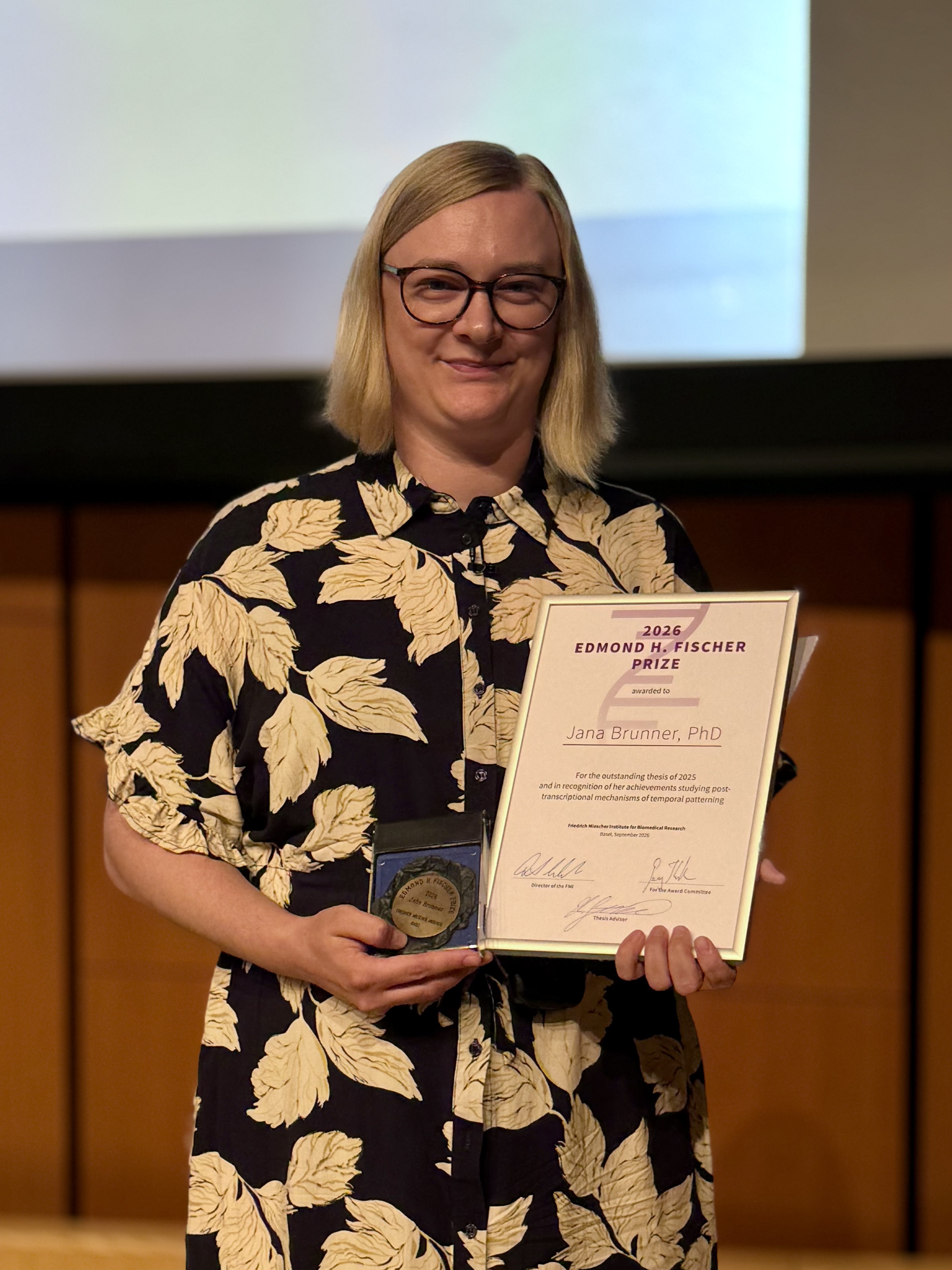 Jana Brunner, recipient of the Ed Fischer Prize 2026
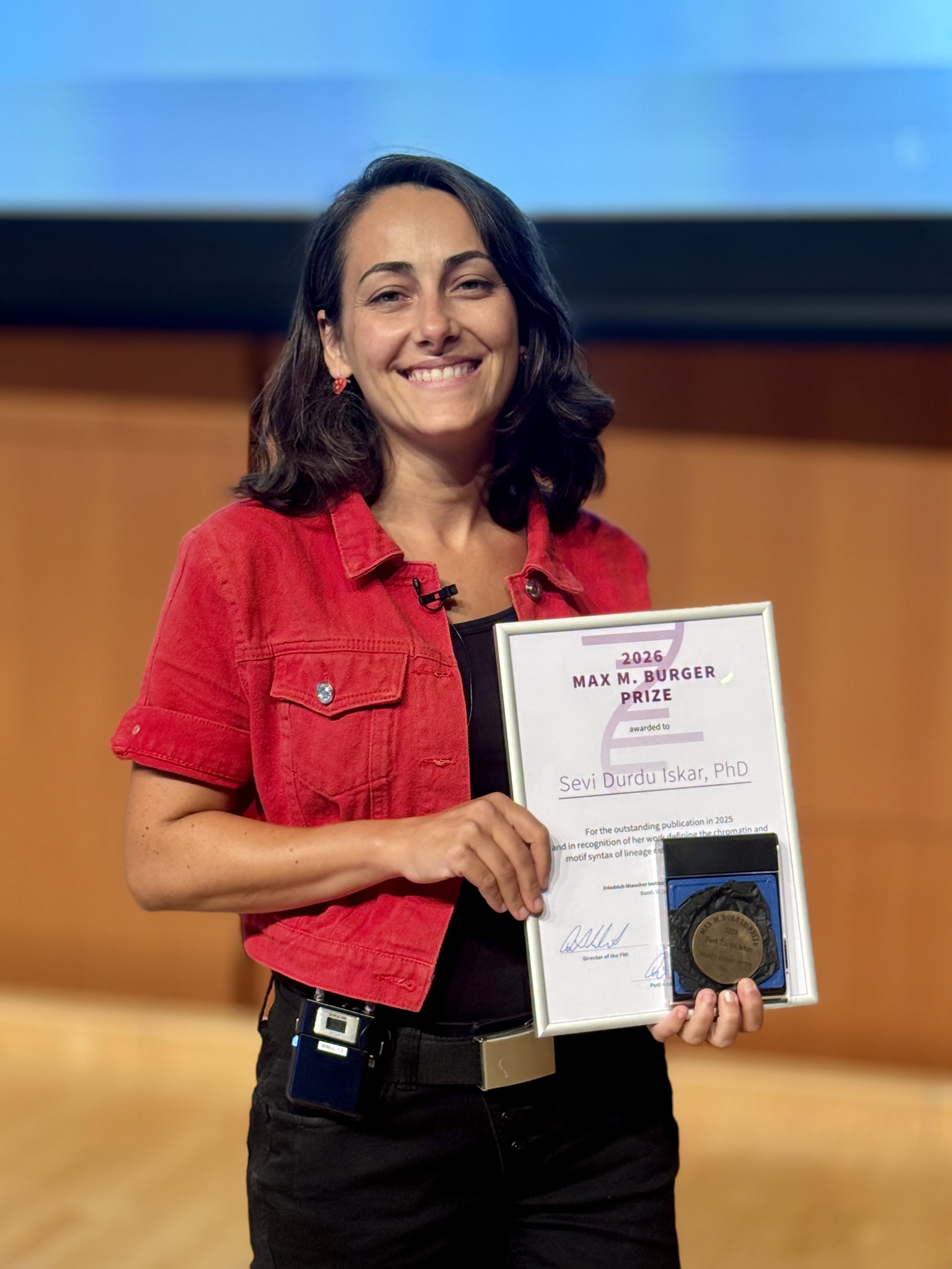 Sevi Durdu, recipient of the Max Burger Prize 2026
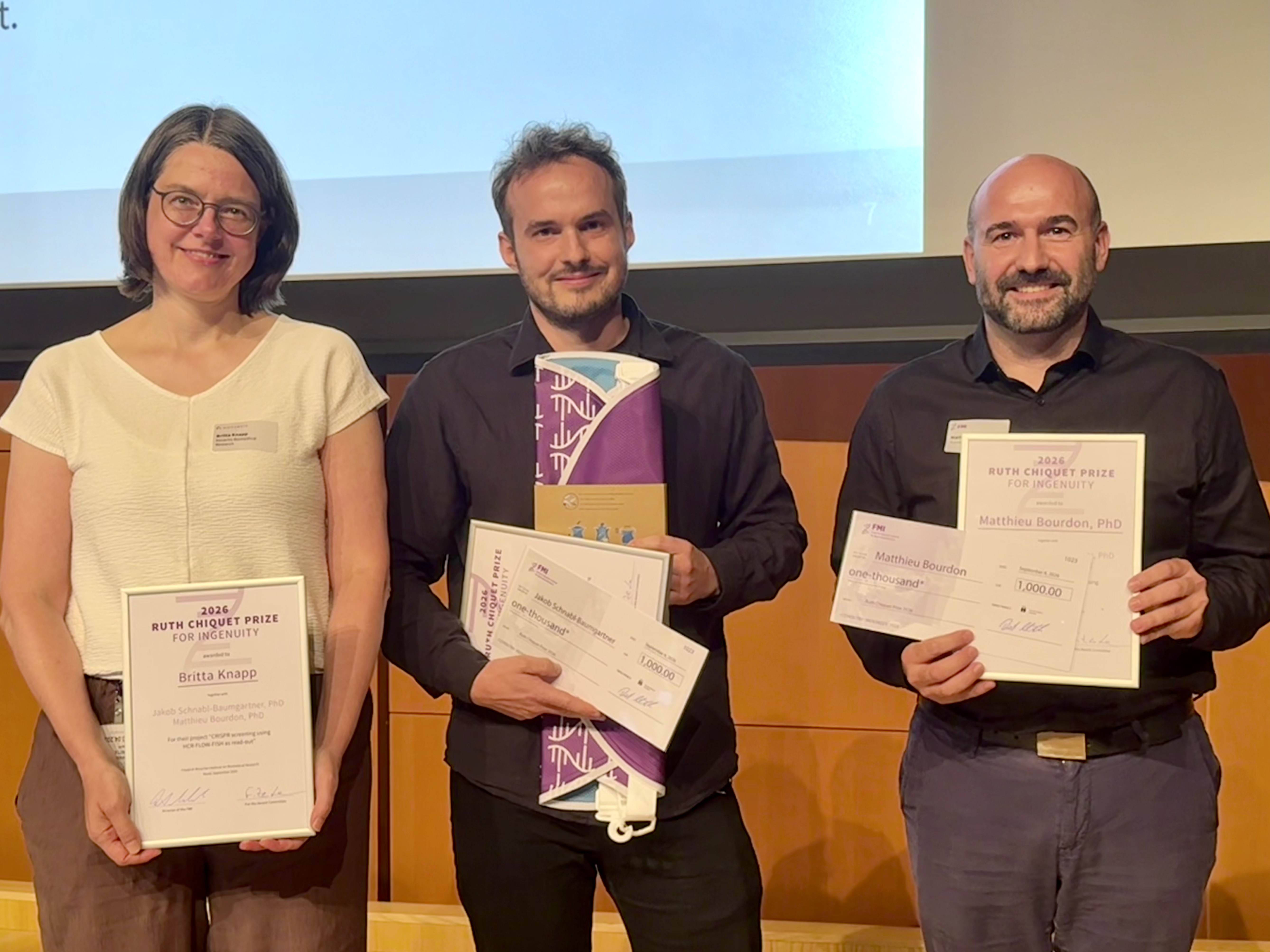 From left to right: Britta Knapp, Jakob Schnabl-Baumgartner and Matthieu Bourdon, recipients of the Ruth Chiquet Prize 2026
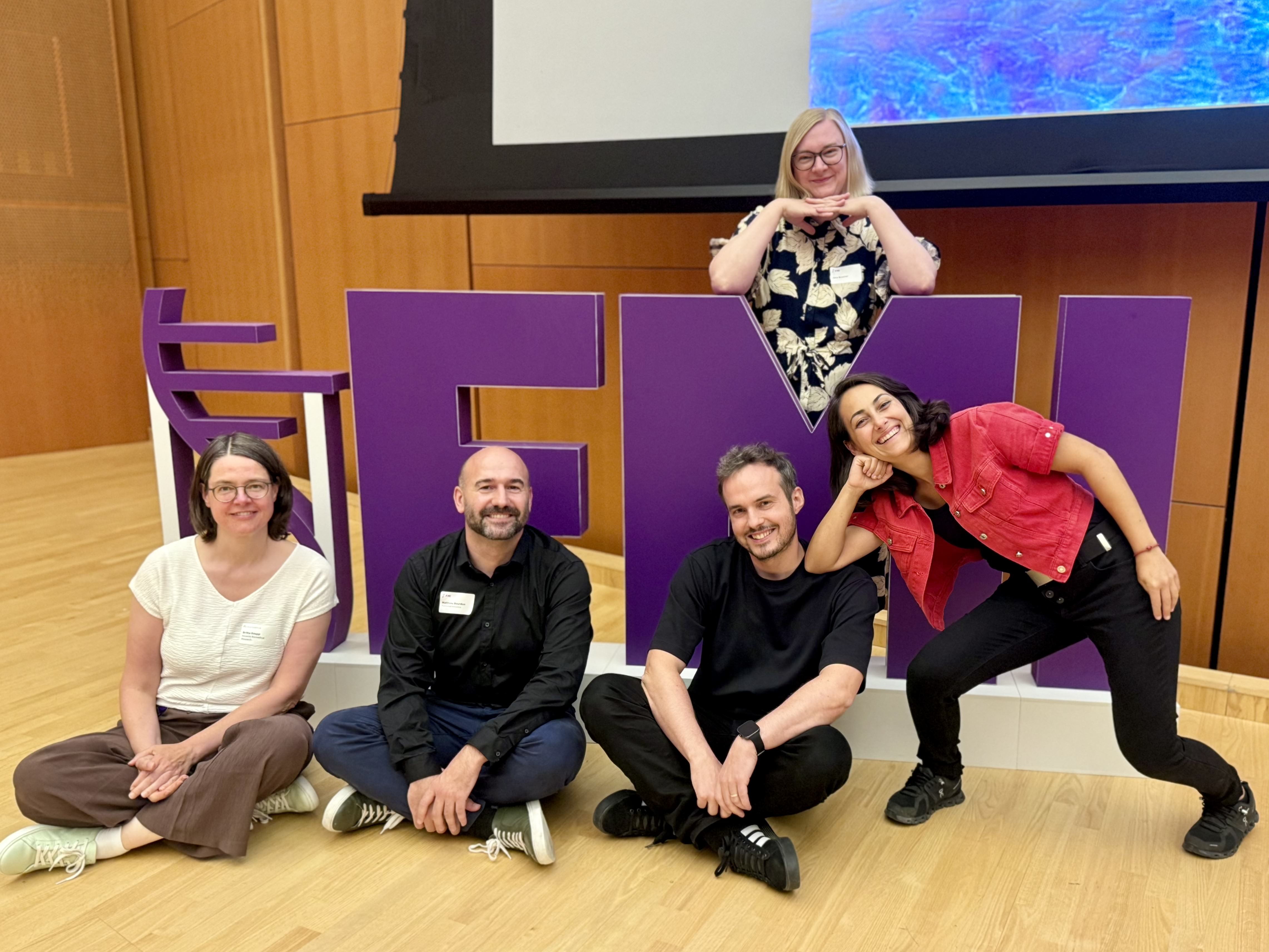 The recipients of the FMI Science Prizes 2026
FMI ANNUAL MEETING 2026
This year’s Annual Meeting is being held on the Novartis Campus in Basel from September 7–9, bringing together around 300 FMI scientists, several colleagues from Novartis, and members of the institute’s Scientific Advisory Board. The program features a series of scientific presentations by FMI researchers, alongside a plenary lecture delivered by Ruth Lehmann from MIT’s Whitehead Institute for Biomedical Research in Cambridge, Massachusetts, who studies how germ cells — the cells that become eggs and sperm — form, maintain their identity, and transmit biological information from one generation to the next. On Wednesday afternoon, attendees will take part in recreational activities, including bouldering, hiking, and tours of the Novartis Campus, the Tinguely museum and the Feldschlösschen brewery. In the evening, participants will gather for a gala dinner, followed by the traditional ‘follies’.


