October 19, 2026
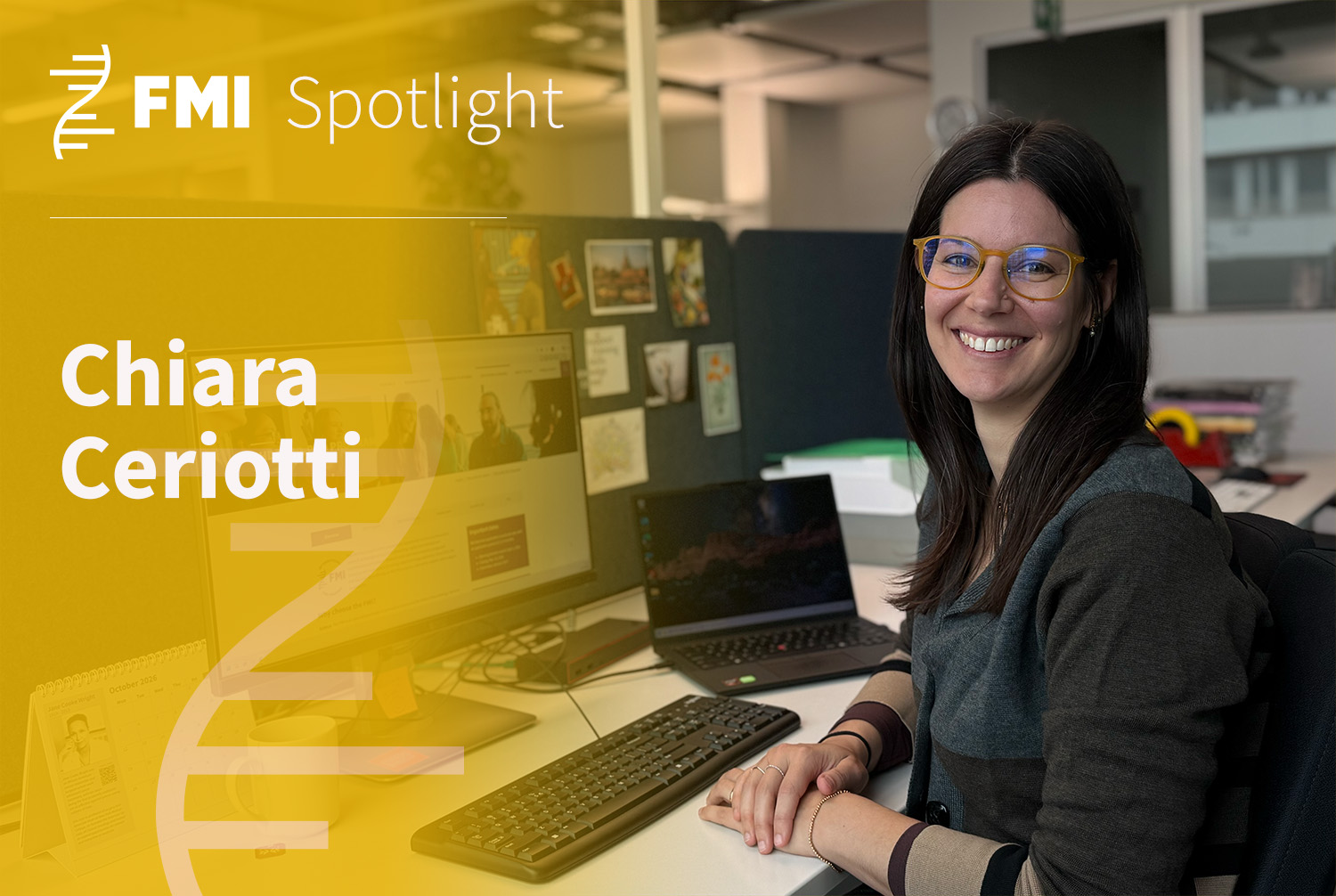
Chiara Ceriotti: Supporting researchers beyond the bench
In this Q&A, Chiara Ceriotti, the new Head of Student and Postdoc Affairs at the FMI, explains why she thinks the real output of a PhD is the scientist rather than the thesis, and shares her ideas for supporting early-career researchers, from onboarding to alumni engagement.
Looking back at your career, how did it shape the way you think about supporting early-career researchers?
As a PhD student, I had both a very good supervision experience and a not-so-good one, and I saw how much that affected my confidence and my work. Later, at the Vienna BioCenter, I often saw students feeling stuck when parts of their research or career seemed outside their control. I can’t do the work for them, but I can help them see where they still have agency in their project and their career.
What attracted you to the FMI?
The size of the institute appealed to me because it creates a close-knit community. It’s very international and dynamic, and the biomedical research is close to my background. The PhD program is more than 25 years old, so there’s already a solid structure. The professional development and mentoring opportunities for postdocs, along with the EDI initiatives already in place, really show that the FMI is committed to investing in its people. The challenge is figuring out how those structures can evolve to help researchers reach their potential.
What would you like to work on?
My favorite topics are onboarding and alumni: attracting great people, helping them make the most of their time here, and staying connected afterwards. I’m still in scavenger-hunt mode at the FMI, but I’d definitely like to explore the connection with Novartis, and alumni could be a natural starting point. Alumni can offer expertise, advice and role models for current researchers.
Who are your role models?
My master’s thesis supervisor, Emilie Vénéreau, taught me how to do science and made me think, “I want to do that.” My boss at the Vienna BioCenter, Eva Schmid, taught me to approach difficult situations with curiosity rather than frustration. Simply asking, “What did you mean by that?” can change a conversation. I’d also mention Arantxa Sánchez, the coordinator of my PhD program in Dresden. Working with her as a PhD representative helped shape the career I eventually stumbled into. That’s why representation matters: you need to see someone doing something to imagine yourself doing it.
What’s one big challenge for early-career researchers today, and what can an institute like the FMI do about it?
Things move very fast and there’s a lot of competition, so you need to keep asking yourself what you want to do and what you bring to the table. What is really the output of a PhD: the thesis, or who you become through the experience? You grow through the challenges and breakthroughs. So when people say, “My results aren’t that great,” I think the more important question is: what are you learning, and who are you becoming? That’s also why good mentoring matters: supervisors can help researchers navigate the ups and downs of a project while supporting their growth as scientists.
How do you build that mindset into a research institution?
It means starting with an onboarding process that helps people feel part of the institution from the beginning, and then offering continuous opportunities to grow. Science and discovery are what bring us all together and why we’re at the FMI in the first place. Early-career researchers can learn a huge amount from the scientific community around them — through seminars, visiting speakers and experienced colleagues in the facilities — but that should be complemented by opportunities to develop other skills as well. With the right mix of scientific exchange, courses and professional development initiatives, they can grow into well-rounded scientists and leaders in their field, wherever their next career step takes them.
Tell us about a passion or hobby that might surprise people.
Anything I can do with my hands that gets me out of my brain. Pottery is amazing. I’ve also done embroidery and, recently, crocheting. Right now I’m crocheting an octopus, the mascot of the Vienna BioCenter PhD program. My colleagues there gave me the kit as a farewell gift, and it’s almost done. Now I need an FMI-related crochet project.
Chiara Ceriotti was born in Segrate, near Milan, and studied medical biotechnology at Università Vita-Salute San Raffaele. She moved to Dresden for a PhD in immunology at the Center for Regenerative Therapies at Technische Universität Dresden, then spent five years at the Vienna BioCenter, where she was PhD Program Manager. She now lives in Basel with her husband.


